AI Search Visibility: What Marketing Leaders Need to Know
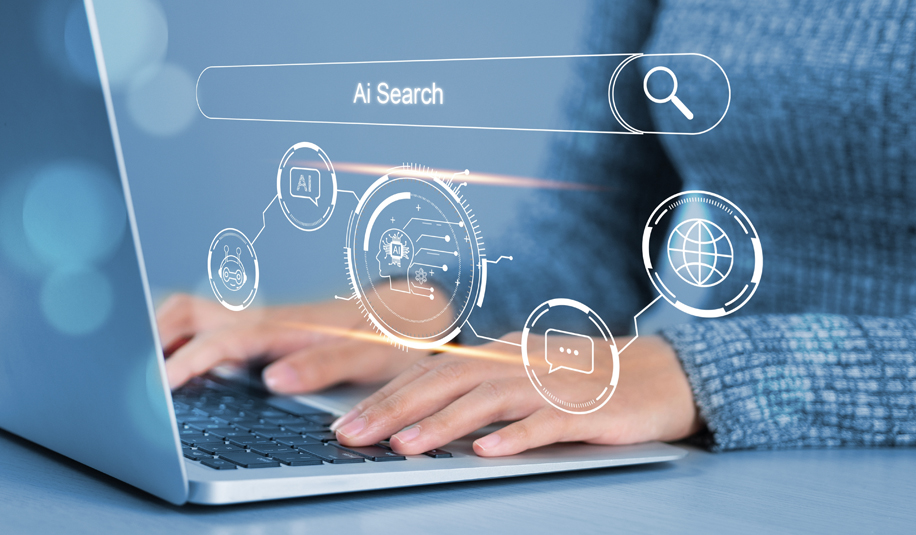
Google isn’t the only game anymore. People are finding brands through AI tools like ChatGPT, Gemini, Claude. Google still matters, but now there’s a whole other layer: AI Overviews, AI Mode, and these generative AI tools that are increasingly where discovery happens.
For brands, that means one thing: If you aren’t appearing in AI search, you risk being left out.
You’re probably familiar with the old search journey: a person searched online → clicked a few results → browsed websites → compared options → and then decided.
Now AI is compressing that process: prompt → short list → choose.
A user can search with AI for the “best” recommendations and AI will do the filtering in seconds, providing a shortened, direct answer. Instead of moving through many pages, AI search is reducing the number of places people need to visit before they make a decision.
That shift matters because AI is making the first recommendation more important than ever. In other words, if an AI tool puts your brand in the shortlist early, you may win a customer before they even start comparing other options.
Brands that only optimize for traditional SEO can experience the invisible brand problem, as these tactics don’t directly translate to AI search visibility, causing brands to miss out on a new layer of discovery. A strong website can still be overlooked if AI-powered search doesn’t understand what the brand does, who it’s for, or why it should be trusted.
At the same time, AI search can create more opportunities to get discovered. These systems rely on signals across the web, including how often a brand is mentioned, where it is cited, and how clearly it’s connected to a topic or service. In fact, a recent study found that the number of mentions of the brand name anywhere across the web are one of the strongest factors linked to AI Overview visibility.
This doesn’t mean SEO is dead, but it’s expanding in the form of Generative Engine Optimization (GEO). Brands now need to go beyond search rankings and think about how they show up across the web in order to be recommended by AI. A strong website still matters, but so does how clearly your brand is described, cited, and mentioned elsewhere online.
Ultimately, the path forward requires a strategy that considers both SEO and GEO in order to position your brand for success. When these elements work together, SEO helps people find you while GEO helps AI-powered search understand you well enough to recommend you.
AI tools tend to reward brands that are easy to understand and trust.
To create brand understanding and visibility:
To build brand trust in the era of generative AI, the E-E-A-T Signals (Experience, Expertise, Authoritativeness, and Trustworthiness) should be applied. Following this framework makes it easier for AI to validate your brand, as the tools won’t cite anything they can’t determine credibility for.
For best GEO practices, this means:
These signals should show up across your website, as well as many key places where your brand can be found online. The framework should be reinforced through your Google Business Profile, social channels, third-party mentions, industry directories, PR coverage, podcasts, and other trusted platforms where buyers and search tools look for validation.
This is where good branding and good marketing work together. A brand that feels clear and consistent everywhere is easier for AI-powered search to understand and evaluate, which in turn makes it easier to recommend.
If you want your brand to show up in AI-powered search, start with the actions that move visibility forward:
Many studies have confirmed that AI-powered search is part of how users discover businesses now. Brands that adapt early will have a better chance of staying visible as the buyer journey keeps changing.
The goal is no longer just ranking on page one of Google. The goal now is being understood well enough that AI can mention you, recommend you, and put you on the short list before a buyer even starts comparing options.
That requires both good branding and good marketing working together. If your brand is hard to explain, hard to trust, or hard to find across the web, AI search is less likely to surface you. At GA Creative, we help brands get this right. If you're trying to figure out where you stand and what to do about it, that's exactly where we start.